Sleep & Bedding
Choosing a Pillow: A Practical Guide to Loft, Fill, and Sleep Position
A pillow is a small piece of equipment with a nightly assignment: keep your head comfortable without asking your neck to do extra work. The right choice depends less on a grand promise printed on a label than on a few practical details—how you sleep, how much loft you need, what the fill feels like, and whether you can care for it properly.
Begin with your usual sleep position, then compare pillow height and firmness. From there, consider fill, warmth, care, and the way a pillow behaves after repeated use. This approach makes the search more manageable—and helps separate a pillow that looks inviting from one that suits your bed.
Start with the position you return to
Most people move during the night, so there is no need to treat a sleep position as a fixed identity. Instead, think about how you spend the greatest part of a typical night and what feels comfortable when you wake. The aim is a pillow that supports your head and neck in a relatively neutral line, rather than pushing the head sharply upward or letting it fall too far toward the mattress.
Mattress feel matters, too. A softer mattress may allow the shoulder to sink farther, changing the gap between the head and the bed. A firmer surface may leave more space to fill. That means two people who sleep in the same position can prefer different pillow heights. Position offers a useful starting point, not a universal measurement.
Side sleeping: often more room to fill
Side sleepers commonly need more loft than people who sleep on their backs or stomachs. The shoulder creates space between the mattress and the side of the head; a pillow that is too low can leave the head tilted down toward the bed. A higher, more supportive profile may help keep the head aligned with the spine.
“More loft,” however, does not mean “as high as possible.” A pillow that pushes the head up can create the opposite problem. Consider your shoulder width, mattress firmness, and how deeply you sink into the surface. If you often fold or bunch a pillow to find a comfortable position, its shape or height may not be working well for you.
Back sleeping: aim for moderate, even support
Back sleepers often prefer a lower or medium profile that supports the natural curve of the neck without lifting the chin toward the chest. Too much height can angle the head forward; too little may leave the neck feeling unsupported. A pillow with a stable center and a comfortable surface can be a useful place to begin.
Look at what happens when you lie down, rather than relying only on a pillow’s description. Your head should feel supported, not propped into a rigid position. If you wake repeatedly to reposition the pillow, or find that it compresses quickly beneath your head, its loft or resilience may be a poor match.
Stomach sleeping: a lower profile is often preferable
Stomach sleepers usually benefit from a relatively low pillow, because a high one can turn the head and neck into a steeper angle. Some people prefer minimal loft; others want a thin layer of cushioning. The key is to avoid adding unnecessary height beneath the head.
Changing sleep positions can take time, and pillow choice alone will not suit everyone’s body or solve persistent discomfort. If pain or numbness is recurring, consult a qualified health professional rather than assuming a different pillow will resolve it.
Loft and firmness are related, but not interchangeable
Loft is a pillow’s height or thickness, especially under the weight of a sleeper’s head. Firmness describes how resistant the pillow feels when pressed. A pillow can be high but soft, compressing substantially once you lie down. Another can be lower yet feel firm and steady. Both qualities shape the support you experience.
This distinction is easy to miss when shopping. A pillow displayed in a package or on a bed may look generous, but its filled height does not tell you exactly how much it will compress overnight. Fill type, chamber construction, stitching, and the amount of material inside all affect how the pillow responds.
- Loft: the pillow’s height before and during use.
- Firmness: how much resistance it offers when compressed.
- Resilience: how readily it returns toward its original shape.
- Support: the combined effect of height, firmness, construction, and your body position.
When possible, test a pillow in the position you actually sleep in. Give it enough time to settle beneath your head. If you are shopping online, read the construction details and return policy, and look for specific descriptions of the feel rather than relying on a single term such as “plush” or “supportive.”
Compare pillow fills by feel and upkeep
Fill influences softness, warmth, weight, movement, and maintenance. No material is automatically best for every sleeper. The useful question is how a particular construction behaves—and whether it suits your preferred feel and care routine.
Down and feather blends
Down clusters are valued for softness and loft; feathers tend to contribute more structure and a firmer, more defined feel. A blend can combine those qualities, but the proportions and arrangement matter. A pillow with a supportive feather center and softer down chambers, for example, may feel different from one with down and feather mixed throughout.
Read the fill description rather than treating “down pillow” as a complete specification. Check the stated blend, shell fabric, and construction. Some pillows use chambers to separate materials and create different zones of support. Fill power is another detail sometimes listed for down: it indicates the volume a given weight of down occupies under standardized conditions. It can help describe loft potential, but it does not by itself determine whether a pillow will feel right for you.
Care is part of the comparison. Some down and feather pillows are machine washable, but follow the product’s own instructions and ensure the fill dries thoroughly. A damp interior can cause problems, and rough or unsuitable washing may damage the pillow. Do not assume that all down products can be cleaned in the same way.
Wool and alpaca
Wool and alpaca are natural fibers often selected for their insulating and moisture-managing qualities. They may appeal to sleepers looking for a less conventional alternative to down, or for a different balance of warmth and breathability. Their feel depends on how the fiber is processed, how much is used, and how it is contained within the pillow.
Compare the fill and shell together. A natural-fiber filling inside a tightly woven cotton encasement will not feel identical to the same kind of fiber in a different construction. Also check cleaning directions before buying: certain specialty-filled pillows call for professional or dry cleaning rather than routine machine washing.
Down alternatives and blended fills
Alternative fills use different fibers to create a soft or lofty feel without relying exclusively on down. Some blends combine down with plant-based fibers. The resulting feel varies, so look for details about proportions, loft, and intended profile. “Hypoallergenic” is not a guarantee that every individual will be free of irritation; sensitivities differ, and the shell, laundering, and bedroom environment can matter as well.
For a lighter, lower-profile option, Flora Pillows use a 600-fill-power Hypodown blend of goose down and milkweed fiber, inside a 230-thread-count cotton shell. The maker describes the pillow as light and breathable and notes that it is handcrafted to order. Its lower-profile positioning may be worth considering for sleepers who prefer less loft; as with any pillow, the best test is whether its height and feel suit your own position.
Cotton shells and the feel at the surface
The outer fabric is not merely packaging. It affects the handfeel, breathability, and durability of the surface next to your face. Cotton is common, with shell details varying by weave, thread count, and finish. A smooth, closely woven cover may feel quite different from a crisp percale shell. If texture or warmth is important to you, consider the fabric alongside the fill.
Match the pillow to your comfort preferences
Sleep position narrows the field, but personal preferences finish the job. Think about whether you like to sink into a pillow or rest on top of it. Do you prefer a soft surface that can be shaped, or a steadier feel that holds its form? Do you sleep warm, or often seek a cozier layer around your head and shoulders?
Pay attention to habits. If you fold a pillow in half, stack two together, or push filling toward one edge, you may be trying to adjust its loft or shape. That information is useful: you may want a higher profile, a more malleable fill, or a construction with more consistent support. A pillow that needs constant rearranging can turn bedtime into a small nightly negotiation.
Allergies and sensitivities deserve practical consideration, too. Check the fiber content, shell, and care instructions, and consider whether the pillow can be washed or protected with an appropriate washable cover. Product labels can describe materials and manufacturing, but they cannot promise an individual health outcome. If you have a known allergy or medical concern, seek appropriate professional advice.
The care label is part of the buying decision
A pillow’s care requirements affect how easy it is to live with over time. Some can be machine washed on a gentle cycle; others need more careful handling or professional cleaning. Before buying, check whether the entire pillow is washable, whether only the cover can be cleaned, and how it should be dried. Follow the specific instructions provided for that product.
Regularly airing and protecting a pillow can help keep the sleep surface fresher between washes. A removable pillow protector adds a washable layer beneath the pillowcase, while routine laundering of pillowcases removes surface oils and dust. Replace or clean components according to their care labels, not a one-size-fits-all schedule.
Over time, a pillow may lose its shape, develop persistent lumps, or fail to return to a comfortable height. These are practical signs to reassess it. A pillow’s lifespan varies with materials, use, and care; appearance alone does not establish whether it still provides the feel and support you want.
Don’t confuse a sleep pillow with a decorative pillow
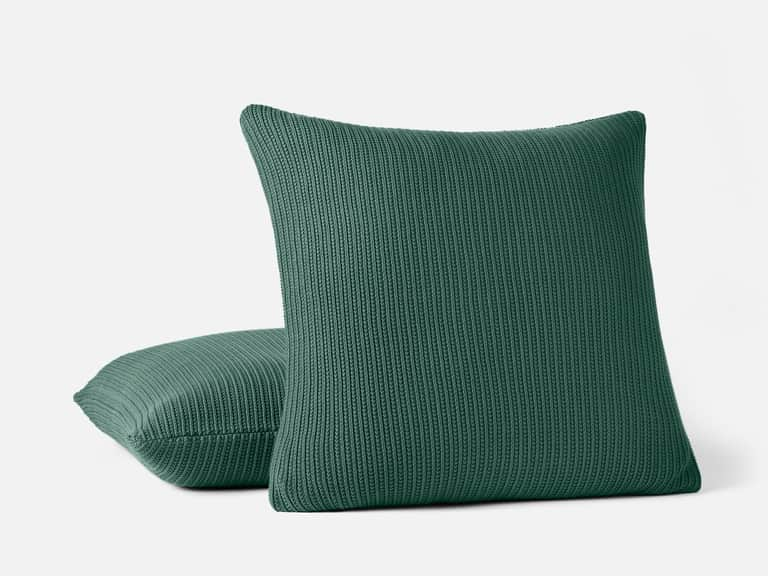
Decorative pillows and pillow covers can add texture and color to a bed, but they are not automatically designed for overnight head and neck support. Their dimensions, fill, and construction may serve styling or lounging rather than sleep. If a decorative cover is used with an insert, confirm that the insert is intended for the use you have in mind and that the overall result is comfortable.
For bedtime, focus first on the pillow beneath your head. Decorative layers can be arranged around it, then moved aside when it is time to sleep. Separating those functions makes it easier to keep the sleep surface practical without giving up a finished, layered look.
A simple pillow-buying checklist
Before choosing, use a short list to compare options on equal terms. Product descriptions often emphasize softness or materials; these questions bring the focus back to how the pillow will work for you.
- What position do I usually sleep in? Use it to estimate whether you are likely to prefer lower, moderate, or higher loft.
- How does my mattress feel? A softer or firmer surface can change the gap the pillow needs to fill.
- Do I want to sink in or stay more supported? Consider firmness and resilience, not height alone.
- What exactly is the fill? Check the materials, proportions, chambers, and any stated fill-power information.
- How warm or breathable does it feel? Consider both the fill and the shell fabric.
- How should it be cleaned? Make sure the care instructions fit your routine and equipment.
- Can I try it or return it? A fair trial or return policy can matter when comfort is difficult to judge remotely.
When comparing two pillows, change one variable at a time if you can. For example, keep the general profile similar while comparing fill types, or compare loft while keeping the fill category consistent. That makes your impressions clearer than switching material, height, and firmness all at once.
Give a new pillow a fair, sensible test
A different pillow can feel unfamiliar at first, especially if you have been using the same shape for years. Try it in your usual sleeping position and notice whether it stays comfortable without repeated folding or repositioning. Consider how it feels over several nights, not just during a brief test in a shop.
Still, discomfort is not a requirement of “breaking in” a pillow. If the height feels obviously wrong, or it repeatedly leaves your head at an awkward angle, take that seriously. A return policy can offer useful flexibility, but it does not replace sound judgment about your comfort.
Remember, too, that a pillow is only one part of the sleep setup. Mattress support, bedding warmth, room conditions, and personal health can all influence how well you rest. A new pillow may improve the fit of your sleep surface, but it should not be treated as a cure for ongoing pain or a substitute for medical advice.
The best choice is the one that fits your night
Choosing a pillow becomes less mysterious when you begin with position and then look closely at loft, firmness, fill, and care. Side sleepers often need more height to bridge the shoulder-to-head gap; back sleepers commonly look for moderate support; stomach sleepers often prefer a lower profile. Those are starting points, not rules written in stone.
Read beyond the label. Compare how the pillow is built, what its fill contains, how much it compresses, and what its care instructions ask of you. Then judge it by the simple nightly question that matters most: does it let you settle comfortably, with support that feels natural for the way you sleep?